A buyer under contract in Sandhurst calls me three weeks before closing, home inspection already behind them, repair credits already negotiated, moving truck already booked. Then their insurance agent asks one question about the electrical panel and the whole timeline stalls. This is the pattern I see most often in West Ashley's older pockets, and it rarely has anything to do with the inspection report itself. The report passed. The insurer is the one saying no.
That distinction matters more than most buyers realize going in. An inspection tells you what condition a system is in. An insurance carrier decides whether it will write you a policy at all, and that decision often lands after your inspection contingency has already closed. If you're buying in one of West Ashley's mid-century neighborhoods, the real risk isn't a surprise on inspection day. It's a surprise from your insurance company after you've already lost your leverage to renegotiate.
The build year tells you what you're walking into
West Ashley isn't one housing stock. It's a series of distinct developments laid down across nearly a century, and each era left a specific, well-documented set of systems behind. Knowing which decade you're buying into tells you almost exactly what an inspector and an insurer are going to flag.
- Windermere, developed in 1926 with residences along Wappoo Cut, and Byrnes Downs, built starting in 1943 with brick cottages named for South Carolina's James F. Byrne, represent the oldest wave. These are 1940s and 1950s construction, often on original cast iron or clay sewer lines.
- The Crescent, at Folly Road and Albemarle Road near Porter-Gaud, holds mostly 1950s to 1970s single-family homes with marsh and Intracoastal views.
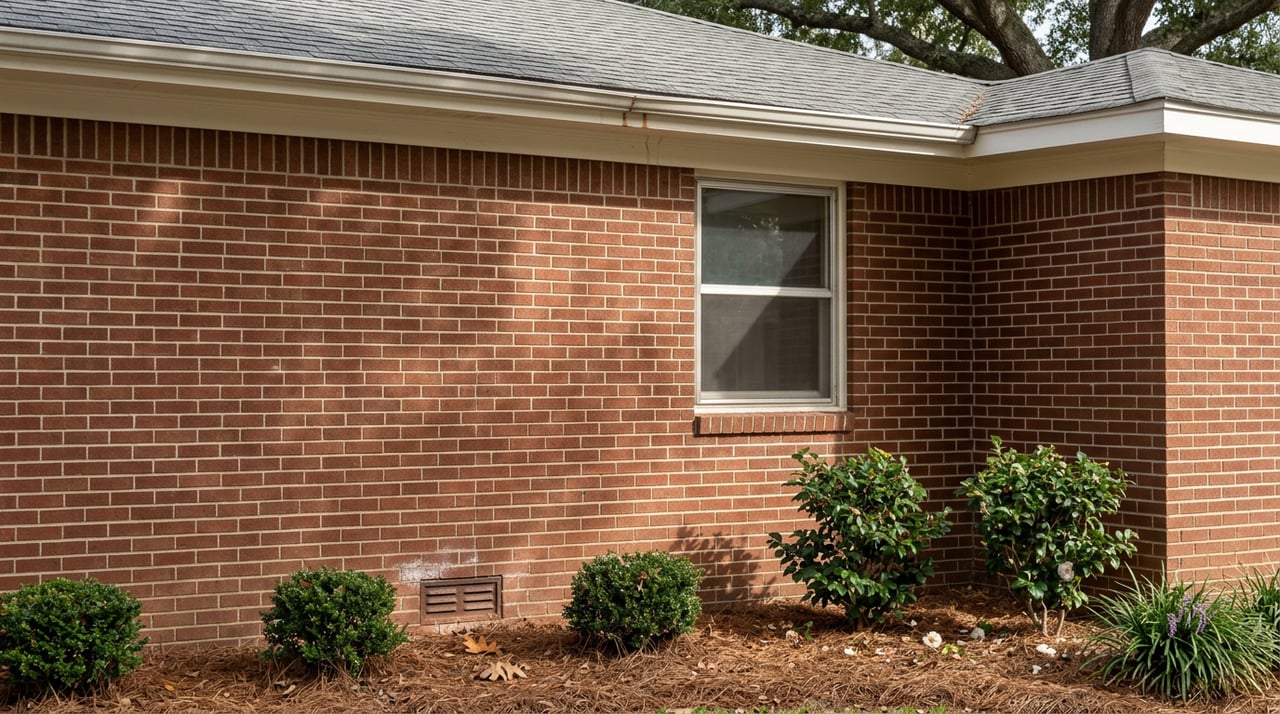
- Sandhurst, along the Ashley River near I-26, is defined by brick ranches built between 1959 and 1980, known locally for wide streets and marsh views.
- Shadowmoss, West Ashley's only golf community near Highway 61 and Bees Ferry Road, spans roughly 1,100 homes built from 1979 through today, with new construction still filling in some of its nine subsections.
Line those build years up against three systems that show up again and again in this market, and the pattern becomes obvious.
Three systems, three different insurance conversations
| System | Typical build years | What shows up at inspection | What it does to your insurance quote |
|---|---|---|---|
| Cast iron or clay sewer lateral | Pre-1970s | Root intrusion, bellied sections, corroded joints | Rarely affects binding directly, but a collapsed line is a five-figure repair most buyers don't budget for |
| Polybutylene plumbing (stamped PB2110) | Roughly 1978 to mid-1990s | Gray or blue flexible pipe with crimped fittings | Many carriers won't bind a policy at all, or write it with a water-damage exclusion, until the pipe is replaced |
| Aluminum branch wiring | Concentrated in 1965 to 1973 construction | Wiring marked "AL" or "aluminum" at the panel or in the attic | Often requires a licensed electrician's remediation, typically with copper pigtail connectors, before a carrier will issue coverage |
A home in Byrnes Downs or Windermere is old enough to carry original cast iron, which is a maintenance conversation more than an insurance one. A home in the Sandhurst build window, or on the later end of The Crescent, may fall within one of those system eras. Those separate build-year windows are where I see the most closing-table friction, because either system can create its own insurance condition.
Shadowmoss homes built after the mid-1990s mostly clear both concerns by build date alone, which is one reason that neighborhood tends to move through inspection and underwriting with less friction than some of its 1960s and 1970s neighbors.
Why this is surfacing more right now
West Ashley's older inventory is moving faster than it has in a while. As of June 2026, closed sales in West Ashley climbed 29.9 percent year over year, median sales price rose 1.5 percent to $583,750, and homes averaged just 30 days on market, according to a Charleston-area brokerage's monthly market report drawing on Charleston Trident MLS data. More of this housing stock is changing hands right now than it was a year ago, which means more buyers are running into these systems for the first time, often without knowing to ask about them before they're deep into a contract.
Part of what's pulling buyers toward these older pockets is the reinvestment happening around them. The Ashley Landing redevelopment at Sam Rittenberg Boulevard and Old Towne Road, a roughly $345 million project combining $300 million from developer EDENS with $45 million in city investment, is rebuilding the old Piggly Wiggly and Ashley Landing shopping center site into a new Publix, retail and restaurant space, and hundreds of new homes. City officials have called it the largest single investment in West Ashley since the Citadel Mall. That kind of commitment tends to draw renewed attention to the surrounding established neighborhoods, and renewed attention means more transactions moving through homes built decades before anyone was thinking about insurance underwriting.
None of that changes what's in the walls of a 1968 Sandhurst ranch. It just means more buyers are encountering it for the first time this year than last.
What to do before the contingency window closes
The fix here isn't complicated, but the timing matters more than the task itself.
Ask your agent to request the plumbing and electrical disclosure details before you write an offer, not after. A seller who has already had a repipe or an electrical panel upgrade usually has documentation, and that single piece of paper can save you weeks. If the home falls inside the polybutylene window, roughly late 1970s through the mid-1990s, or the aluminum wiring window of 1965 to 1973, get a quote from your insurance carrier during your due diligence period, not after. That's the step most buyers skip, and it's the one that determines whether you're negotiating from strength or scrambling three weeks before closing.
For anything built before 1970, a sewer scope is worth adding to your inspection regardless of what the standard inspection finds, since a standard inspection can't see inside the lateral line. Local inspectors in the Charleston area typically price this as a modest add-on, often in the range of $100 to $150 depending on whether the home sits on a slab or a crawlspace, which is a small cost against a repair that can otherwise run into five figures.
If you're already past your inspection contingency and an insurance issue surfaces, you still have options. Sellers can often address a documented aluminum wiring or polybutylene issue with a repair credit or a price adjustment, even outside the original negotiation window, especially in a market where West Ashley sellers are seeing steady demand but buyers have more choices than they did a few years ago.
A note on selling, not just buying
If you own one of these homes and you're weighing a sale, the same systems work in your favor if you get ahead of them. A pre-listing electrical inspection or a documented repipe removes the exact friction point a buyer's insurer would otherwise raise, and it lets you price the home without absorbing a negotiation hit for something you could have addressed on your own timeline instead of theirs.
Frequently asked questions
Does Sandhurst's lack of an HOA affect any of this? Sandhurst has no mandatory homeowners association, only a voluntary Sandhurst Association that covers the cost of a community directory. That has no bearing on insurance underwriting, which looks at the physical systems in the home itself, not neighborhood governance.
If a home already has PEX or copper plumbing, am I in the clear? Finding PEX or newer copper branching off older piping is often a sign the home was partially repiped at some point, which is worth confirming with the seller, but it doesn't guarantee the entire system was replaced. Ask specifically whether the repipe was whole-house or partial.
Does new construction in West Ashley avoid all of this? New construction avoids the era-specific materials by definition, but a sewer scope is still worth considering on newly built homes, since construction debris and improper installation can affect even brand-new lines.
If you're weighing a home in one of these West Ashley neighborhoods and want a clear read on what a specific build year likely means for your insurance and inspection process, I'd rather walk you through it before you write an offer than after. Let's Connect, and we'll go through it together.
This article is general information, not legal, tax or financial advice. Consult a qualified professional about your situation.