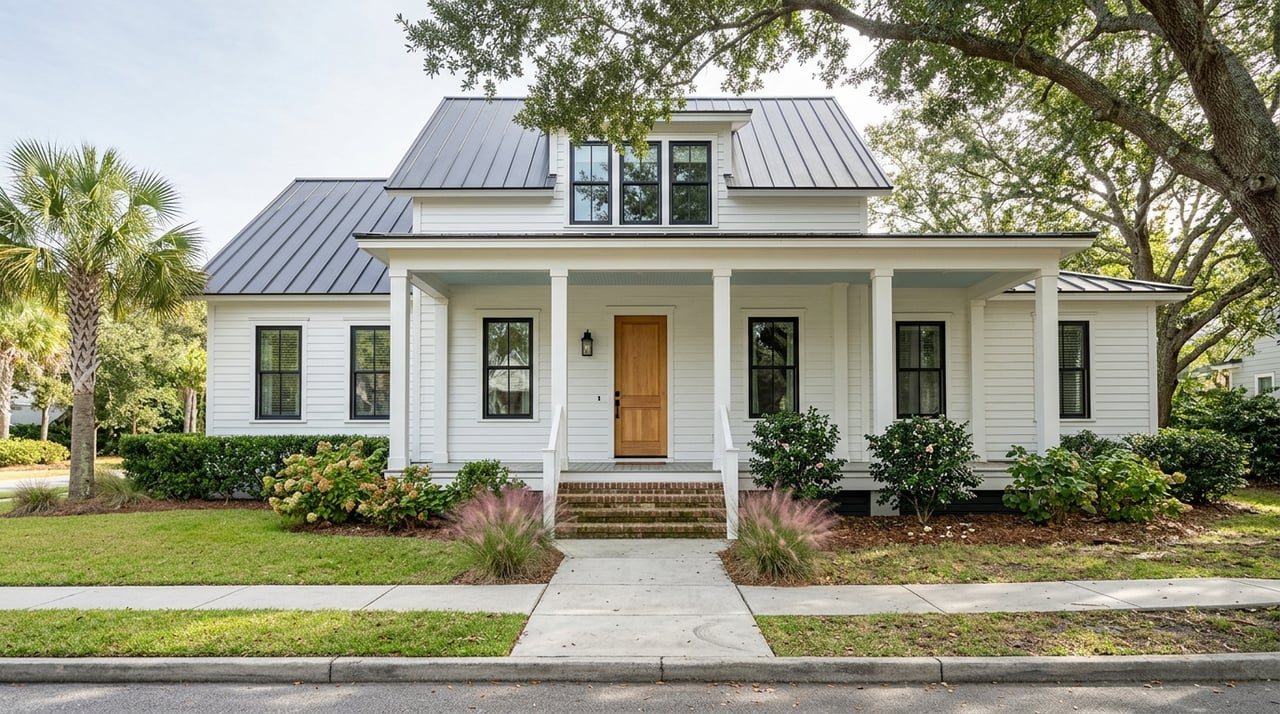
If you are relocating to the Charleston area, one question comes up fast: Should you live in Mount Pleasant or Daniel Island? It is a smart question, because while these two places are often compared, they offer very different day-to-day experiences. If you want a clearer way to weigh commute patterns, home styles, beach access, and lifestyle fit, you are in the right place. Let’s dive in.
Start With the Big Difference
Mount Pleasant and Daniel Island are not direct equivalents. Mount Pleasant is a 49.53-square-mile town with an estimated 95,604 residents in 2024, while Daniel Island is a geographic area within the City of Charleston that is organized through the Daniel Island POA and ARB.
That difference shapes almost everything else. Mount Pleasant is a larger suburban town with many subareas and housing patterns, while Daniel Island is a more tightly planned community with stronger design control and a more self-contained amenity structure.
Compare Your Daily Routine
For most buyers, the best choice comes down to how you want daily life to feel. One area may look great on paper, but if the commute, traffic pattern, or neighborhood rhythm does not match your routine, it can feel off pretty quickly.
A helpful way to think about this comparison is simple: Mount Pleasant offers more variety and flexibility, while Daniel Island offers more structure and internal consistency. Neither is automatically better. The right fit depends on what matters most to you.
Mount Pleasant Commute Access
Mount Pleasant is shaped by several major commuter corridors, including US-17, Coleman Boulevard, and I-526. Town planning documents identify US-17 as the route from the Arthur Ravenel Jr. Bridge to I-526, Coleman Boulevard as the connection to Charleston and Sullivan’s Island, and I-526 as the connection to I-26, North Charleston, and West Ashley.
That road network gives Mount Pleasant a broad, connected feel. It tends to work well if you want options for getting around the region rather than depending on one main access pattern.
The latest Census quick facts show a mean travel time to work of 24.9 minutes for Mount Pleasant residents. That number does not define every commute, but it does confirm that travel time is an important part of life here.
Daniel Island Commute Access
Daniel Island’s regional access is more tied to I-526 and bridge connections. City of Charleston emergency planning materials map access through the Don Holt Bridge for North Charleston to Daniel Island travel and the Wando River Bridge for Cainhoy to Mount Pleasant travel.
In practical terms, Daniel Island is more bridge-and-interstate dependent than Mount Pleasant. That can still work very well, but it creates a more route-dependent pattern for your daily travel.
Which Area Feels Easier for Commuting?
If you want a more flexible all-purpose home base, Mount Pleasant usually has the easier story. Its road network supports different directions of travel and connects more directly toward downtown Charleston and the beach corridors.
If you prefer a more self-contained community and do not mind a more defined access pattern, Daniel Island may still be a strong fit. It is less about good versus bad and more about whether you want flexibility or predictability.
Mount Pleasant for Downtown and Beach Access
Mount Pleasant has the clearest direct connection to both downtown Charleston and nearby beach routes. Memorial Waterfront Park sits at the base of the Ravenel Bridge, and the town describes it as a waterfront destination with a 1,250-foot pier and family-oriented park space.
The town also identifies Coleman Boulevard as the route linking Mount Pleasant with Sullivan’s Island. In addition, the IOP Connector Trail project is designed to provide continuous access to the IOP Connector Bridge facilities, which reinforces how central that corridor is to everyday travel.
Shem Creek adds another layer to Mount Pleasant’s appeal. The town describes it as a tidal tributary with direct access to Charleston Harbor and notes its long role as both a commercial and residential harbor area.
Daniel Island for Internal Amenities
Daniel Island’s strongest lifestyle advantage is different. Instead of being centered on quick beach spontaneity, it is built around internal amenities and a more organized neighborhood structure.
The Daniel Island POA highlights parks, trails, pools, boat landings, and resident events as core parts of the community. For many buyers, that creates a more self-contained feel where daily life is shaped as much by what is inside the community as by what is outside it.
For beach trips, Daniel Island usually means more of a regional drive. That is not a negative, but it does make beach access less immediate than it often feels in Mount Pleasant.
Home Types in Mount Pleasant
If housing variety matters to you, Mount Pleasant gives you a broader range of settings. The town’s comprehensive plan describes conventional residential neighborhoods as largely low-density single-family subdivisions, while traditional residential areas may include detached homes, townhouses, and duplexes.
The plan also notes mixed neighborhoods that combine multiple housing types within one development. That means your experience can vary quite a bit depending on which part of Mount Pleasant you are considering.
Old Village shows just how different one subarea can feel from another. The town identifies the Old Village Historic District as a 30-block area bounded by Charleston Harbor, Shem Creek, Royal Avenue, and McCants Drive, with older homes and a preservation overlay that create a more historic street pattern.
Home Types in Daniel Island
Daniel Island offers a more curated mix of housing. The POA says the Daniel Island Community Association includes single-family and townhome properties south of I-526 as well as Parkside Condominiums.
ARB materials also list current projects that include apartment and condo buildings at The Waterfront, townhomes and single-family homes at The Marshes, and apartment and townhome phases at Nowell Creek Village. So while there is variety, it is variety inside a highly guided master-planned framework.
Daniel Island Park is even more controlled in its design approach. Current design guidelines say single-family detached homes are the default, while smaller cottages and townhomes may be allowed in some cases, with detailed standards for setbacks, lot coverage, and landscape protection.
Lifestyle Feel: Layered vs. Coordinated
Mount Pleasant tends to feel more layered, active, and varied. Its identity is spread across established neighborhoods, newer suburban growth, waterfront spaces, and major local destinations like Shem Creek and Memorial Waterfront Park.
The town continues to invest in those public spaces and connections. Memorial Waterfront Park Phase III adds a splash pad, dog park, walking track, and courts, while current transportation work includes projects tied to active transportation and corridor access.
Daniel Island feels more coordinated and association-managed. The POA says the community includes hundreds of acres of parks and passive greenspace, a 25-plus-mile trail system, three community pools, and two community boat landings.
The POA also helps coordinate social, educational, and recreational programs and enforces community restrictions through covenants and ARB review. That creates a more structured rhythm that appeals to buyers who want a master-planned environment with a clear amenity system.
A Simple Side-by-Side View
| Priority | Mount Pleasant | Daniel Island |
|---|---|---|
| Commute pattern | More flexible regional road access | More bridge-and-interstate dependent |
| Downtown access | More direct peninsula-oriented route | More route-dependent regional access |
| Beach access | Stronger connection to beach corridors | Usually more of a regional drive |
| Housing mix | Broader variety across subareas | Curated mix within a master plan |
| Community feel | Layered and varied | Coordinated and amenity-focused |
| Design control | Varies by area | Stronger POA and ARB oversight |
How to Choose Your Home Base
If you are still deciding, try filtering the choice through your real daily priorities. Ask yourself where you want the most convenience, where you want the most predictability, and what kind of neighborhood feel helps you settle in fastest.
Mount Pleasant may be the stronger fit if you want:
- A larger town with more neighborhood variety
- More direct access toward downtown Charleston
- Easier beach-oriented routing
- A wider mix of older and newer housing areas
Daniel Island may be the stronger fit if you want:
- A more master-planned environment
- Strong internal amenities like trails, pools, parks, and boat landings
- A more coordinated community structure
- Consistent design standards and architectural review
The Bottom Line
The best choice is not about which place is better. It is about which setting matches your routine, priorities, and comfort level.
If you want a broad suburban town with multiple lifestyle pockets and direct downtown-plus-beach corridors, Mount Pleasant often makes more sense. If you want a more controlled, self-contained island community with a strong amenity system, Daniel Island often stands out.
If you want help narrowing down which area fits your commute, home search, and relocation timeline, Michele Moriarty offers calm, full-service guidance to help you make a confident move.
FAQs
What is the main difference between Mount Pleasant and Daniel Island?
- Mount Pleasant is a larger town with many subareas and housing patterns, while Daniel Island is a more tightly planned area within the City of Charleston with POA and ARB oversight.
Which area is better for downtown Charleston access?
- Mount Pleasant is generally the more downtown-friendly option because of its direct peninsula-oriented route over the Ravenel Bridge and along US-17.
Which area is better for beach access near Charleston?
- Mount Pleasant is usually the easier choice for beach access because its road network directly connects to Sullivan’s Island and the IOP Connector corridor.
Which area has more neighborhood variety for homebuyers?
- Mount Pleasant offers more neighborhood variety because the town includes conventional, traditional, mixed, and historic residential settings.
Which area feels more master-planned and amenity-focused?
- Daniel Island usually feels more self-contained and amenity-managed because of its trail system, parks, pools, boat landings, community programs, and design review structure.
Which area has more housing types available?
- Mount Pleasant offers broader housing variation across the town, while Daniel Island offers a curated mix of condos, apartments, townhomes, and single-family homes within a master-planned framework.